
In early October 2026, Uzbekistan won the Chess Olympiad in front of a home crowd in Samarkand. It was the country's second Olympiad gold in four years. A month later, one of its players starts a World Championship match. For a country that had a single famous grandmaster a generation ago, it is one of the fastest rises the chess world has seen.
Gold in Samarkand
The 46th Chess Olympiad was the largest in history, held in the city whose Registan square appears on postcards across Central Asia. The Uzbek team won 10 of its 11 matches and finished with 20 match points. Gold was already secure before their final-round match against Ukraine had finished, but they won that one too, 2.5 to 1.5.
| Section | Gold | Silver | Bronze |
|---|---|---|---|
| Open | Uzbekistan | India | Germany |
| Women | China | Kazakhstan | India |
Germany's bronze was its first open-section medal since 2000, and India's silver came on tiebreak after finishing level with Germany on 18 points.
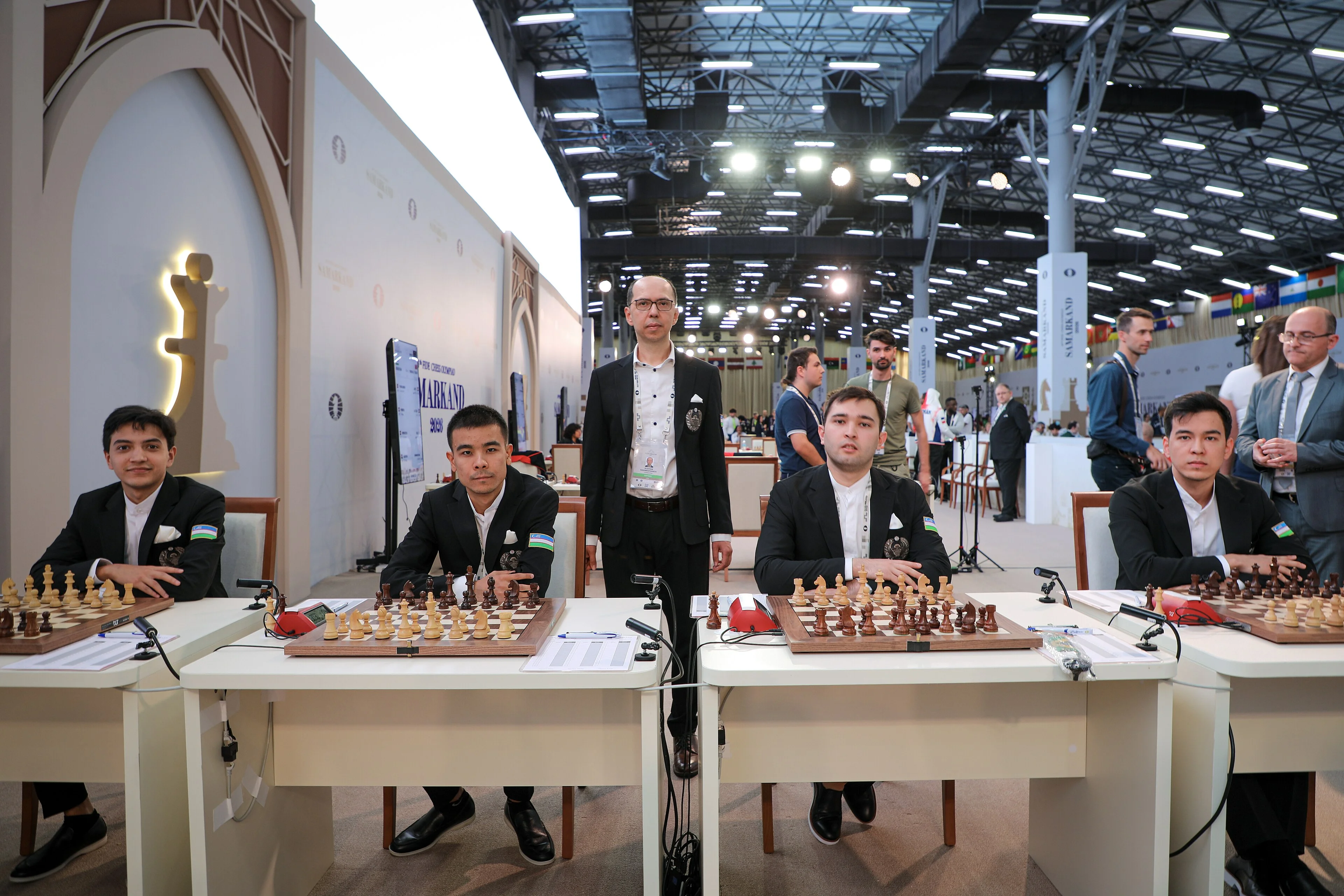
The Team
The Samarkand line-up was almost the same as the one that won in Chennai in 2022:
- Javokhir Sindarov: 2025 World Cup winner, 2026 Candidates winner, and the challenger for the world title in November.
- Nodirbek Abdusattorov: World Rapid Champion in 2021 at just 17, beating Magnus Carlsen along the way, and a fixture in the world top ten.
- Nodirbek Yakubboev and Shamsiddin Vokhidov: strong grandmasters who give the team depth on the lower boards.
- Muhiddin Madaminov: the one new face, replacing Jakhongir Vakhidov from the 2022 team.
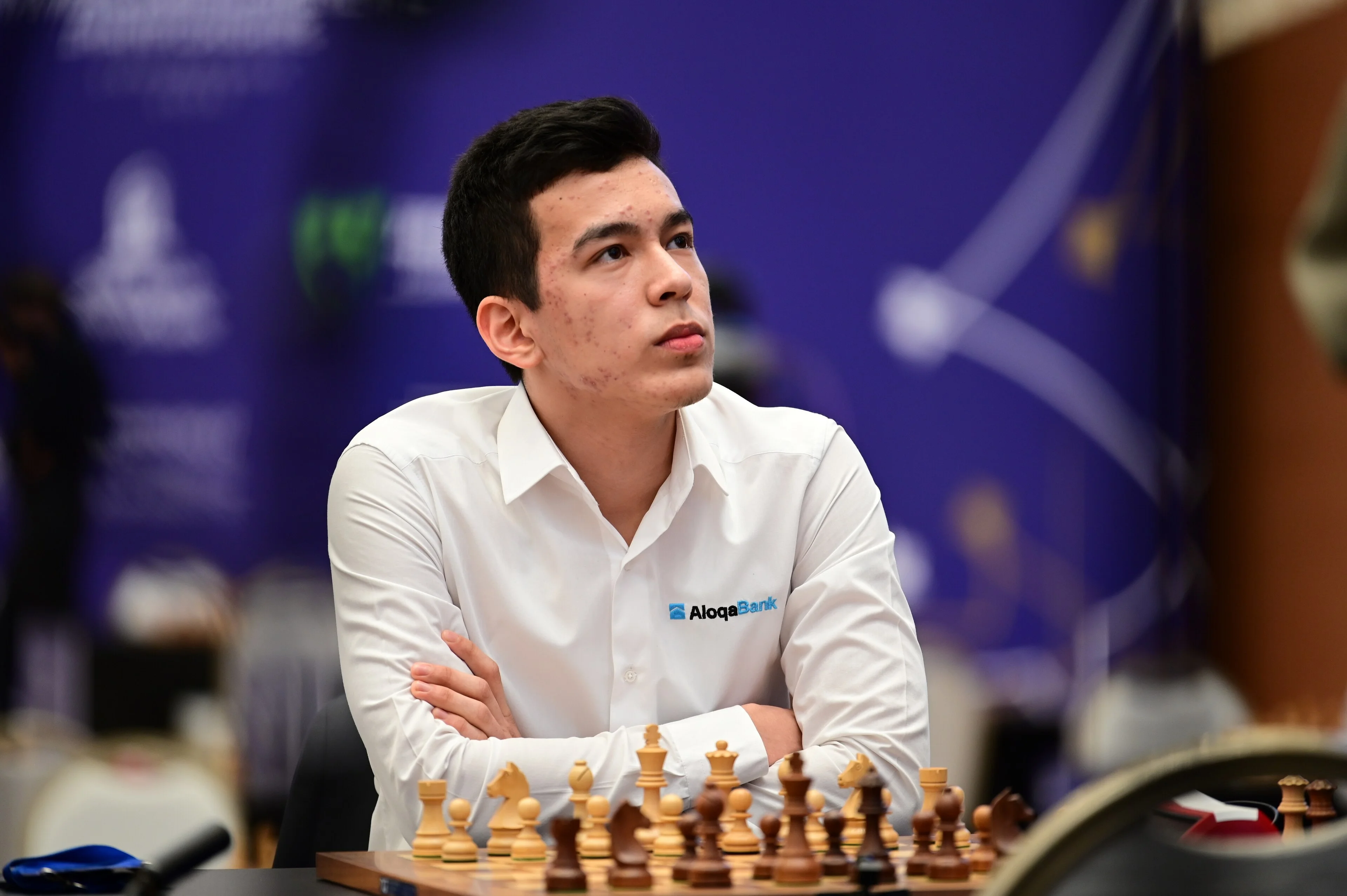
Chennai 2022: The Shock
Uzbekistan's first Olympiad gold in Chennai was a big surprise. The team was young, seeded well below the favorites, and went through the whole event unbeaten. Most of its players were still teenagers. At the time it looked like a brilliant one-off. Four years later it looks like the start of something.
Why Uzbekistan Keeps Winning
1. A generation that grew up together
Sindarov, Abdusattorov and Yakubboev are almost the same age and have played on youth teams together since childhood. Team chess rewards trust: knowing when a teammate will push for a win and when you need to hold a draw. This group has had a decade to learn that.
2. A former world champion in charge
The team's coach and captain is Rustam Kasimdzhanov, who won the FIDE World Championship in 2004 and later worked as a second for world champions. He brings elite preparation methods to a team that was already talented.
3. Early grandmasters
Sindarov earned the grandmaster title at 12 and Abdusattorov at 13. Getting to that level so young means years of playing strong opposition before most players even reach master level. By their early twenties, they have the experience of players a decade older.
4. A country that backs the game
Chess in Uzbekistan has strong government support, from youth programs to the decision to host the Olympiad itself. Success feeds on itself: every medal brings more children into chess clubs.
What Comes Next
The biggest test starts on November 24, when Sindarov plays Gukesh for the world title in Geneva. Our full preview of the match covers the format and the form of both players. If Sindarov wins, Uzbekistan will have its first classical world champion, and the generation that shocked Chennai will have won everything there is to win.
What Club Players Can Take From This
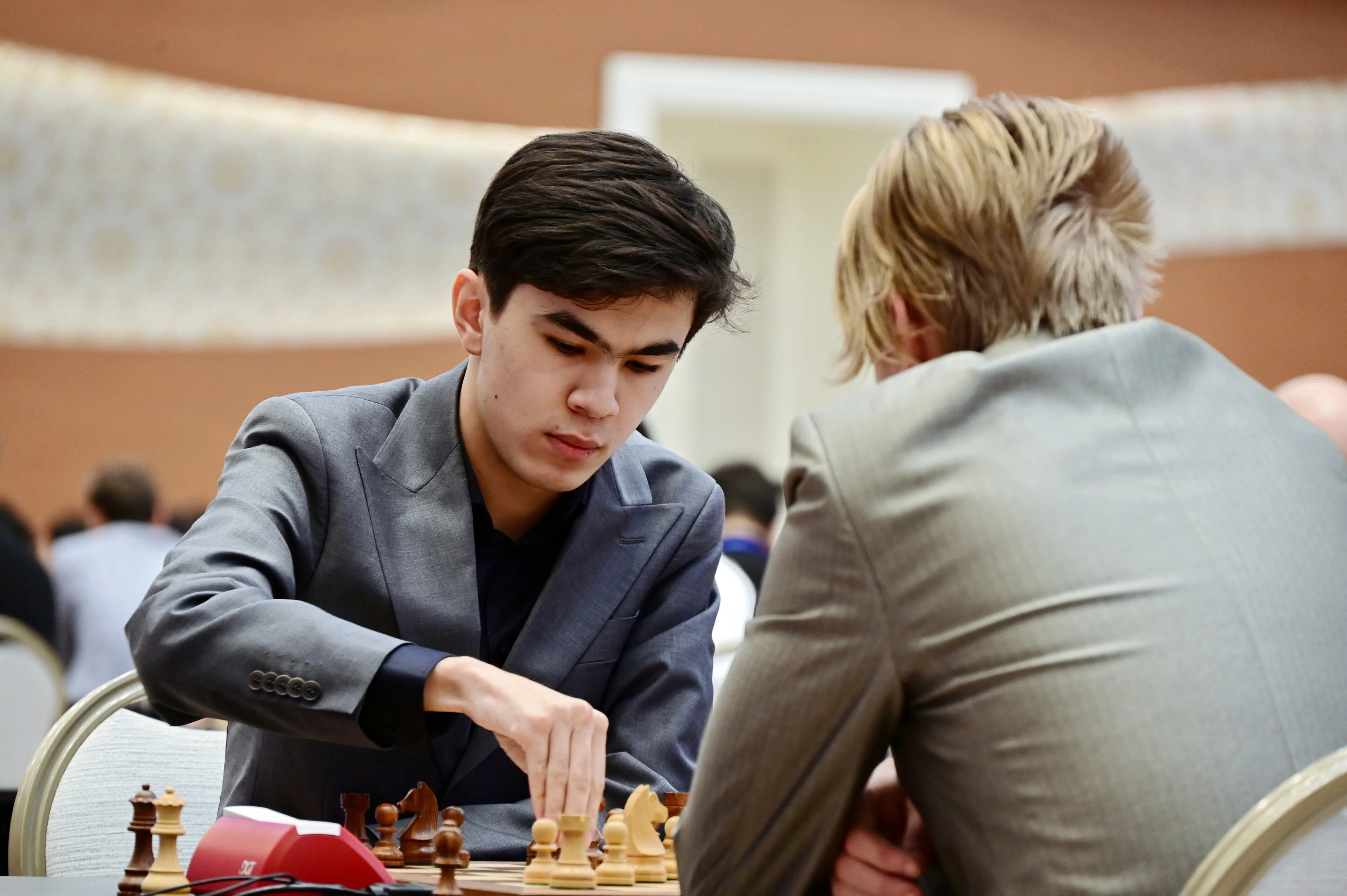
You do not need a national program to borrow the main idea: train consistently, with the same people, on the same material, for a long time. The Uzbek players saw the same tactical patterns over and over from childhood until spotting them took no effort. You can build the same habit with a fixed puzzle set solved in repeated cycles, which is the idea behind pattern recognition training.
Uzbekistan Chess FAQ
Who won the 2026 Chess Olympiad?
Uzbekistan won the open section on home soil in Samarkand, ahead of India (silver) and Germany (bronze). China won the women's section, with Kazakhstan second and India third.
How many times has Uzbekistan won the Chess Olympiad?
Twice: in Chennai in 2022 and in Samarkand in 2026.
Who are Uzbekistan's best chess players?
Javokhir Sindarov, the 2026 Candidates winner and World Championship challenger, and Nodirbek Abdusattorov, the 2021 World Rapid Champion. Nodirbek Yakubboev and Shamsiddin Vokhidov complete the core of the Olympiad team.
Why is Uzbekistan so good at chess?
A generation of players who all became grandmasters as young teenagers, a former world champion as their coach and captain, strong state backing for chess, and the experience of growing up together on the same national team.
Header photo: Registan square, Samarkand, by Bernard Gagnon, public domain (CC0). All photos via Wikimedia Commons.
// TOPICS
// APPLY_KNOWLEDGE
Ready to Put This
Into Practice?
> Start training with the Woodpecker Method on ChessPecker today. Build lasting pattern recognition.


